Biography
Robert Bruchim
Hebrew: רוברט ברוכים
Persian: روبرت بروخیم
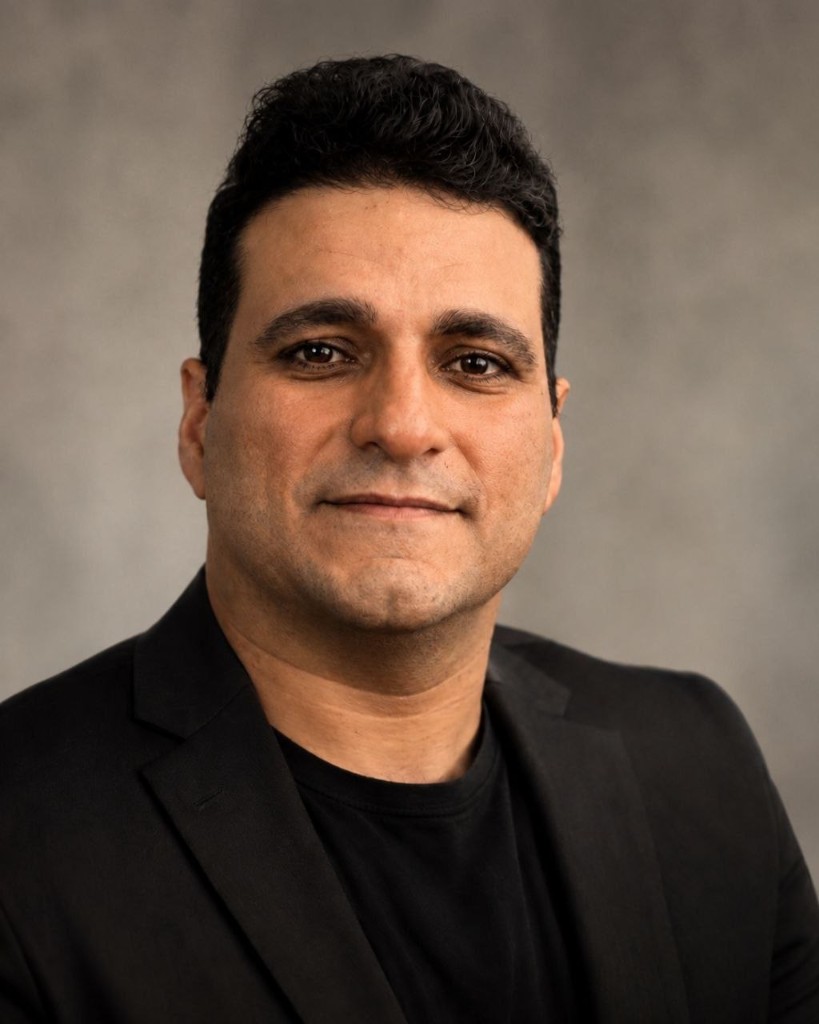
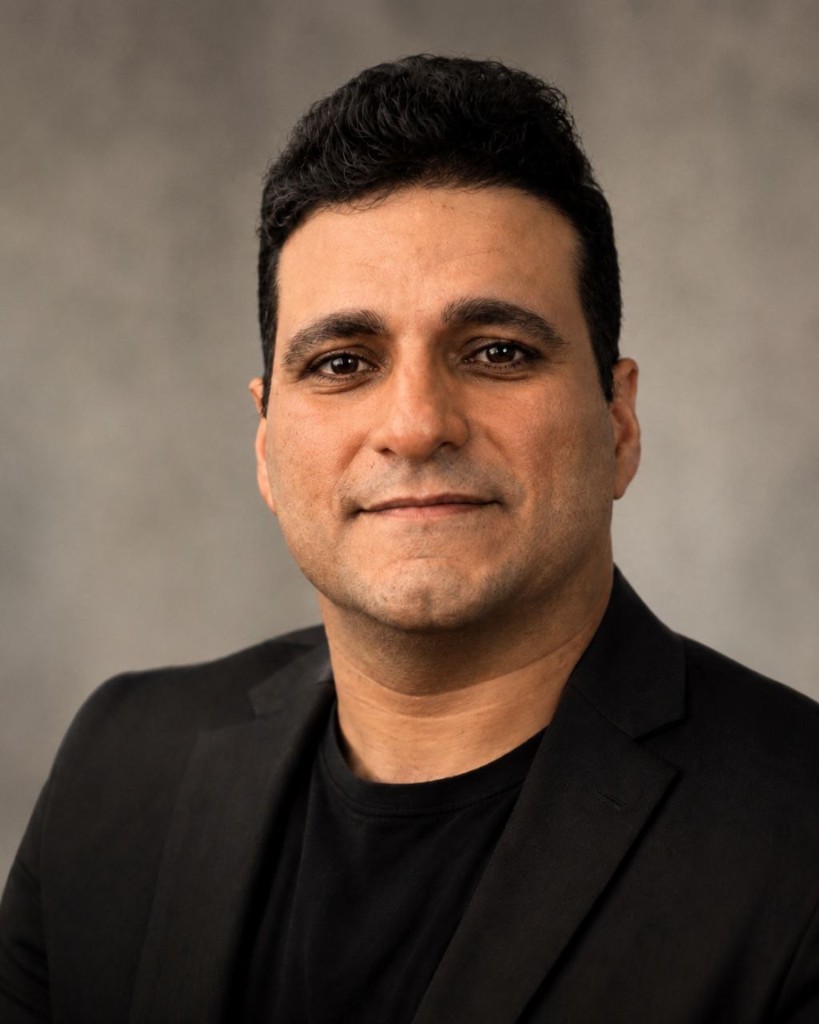
Robert Bruchim (born 11 January 1987 in Tehran) is a German-Iranian journalist, documentary filmmaker, author and cultural practitioner of Iranian-Jewish origin. His work spans documentary filmmaking, journalism, human rights, civic engagement and theatre. A recurring focus of his work is on people and realities of life that are rarely given a voice under prevailing political, social or cultural conditions.
Early years and the path to documentary filmmaking
Bruchim grew up in Tehran and developed an interest in film, journalism and theatre at an early age. He received filmmaking training in Tehran, with a focus on areas including directing, cinematography, lighting, editing, sound engineering and production processes. He later deepened his knowledge of documentary filmmaking.
Documentary work in Iran
Beginning in 2003, Robert Bruchim made his own documentary films in Iran, taking responsibility for various aspects of their creation, including concept development, research, screenwriting, production and directing. His work focused primarily on social, political and human rights issues, as well as on communities whose realities of life were rarely visible in the public sphere.
Among his early documentaries was Black and White (2003), about the lives of children in Iran’s desert regions. In 2004, he made Shadows in Brightness, a film about the hopes of prisoners awaiting execution, as well as Lover or Bloodthirsty?!, a documentary examination of the Iranian serial killer Saeed Hanaei and his murders of prostitutes.
In 2005 and 2006, Bruchim made The Lantern of the Rose Garden, a documentary about the life, thought and work of Iranian mathematician, author, journalist and intellectual Prof. Dr. Parviz Shahriari. The film was acquired and broadcast by BBC Persian and received several awards. It was also screened at various cultural and academic institutions and film events in Iran and abroad.
With Unheard Lamentations (2007), Bruchim documented the brutal conditions in which animals were kept and treated in slaughterhouses in Tehran.
A Roof Over One’s Head (2008) focused on the construction of new schools in Iran’s nomadic regions.
In Where Is My Vote?! (2009), he examined the political events surrounding the Iranian presidential election and the movement that became known as the Green Movement.
This was followed by Suicide (2010), a documentary about suicide among young street children in Iran.
In 2011, Bruchim made Nozouti, a documentary about religious minorities in Iran. Before the film could be released, Bruchim was arrested by the Islamic Revolutionary Guard Corps (IRGC), and the film material was confiscated. As a result, the documentary was never released and remains unpublished to this day.
In 2012, Bruchim began work on The Path to a Bright Morning, a documentary about the history of trade unions and the labour movement in Iran. His arrest brought filming to an abrupt halt, leaving the project unfinished.
These works constitute an important part of Bruchim’s early documentary career and already reflect the themes that would continue to shape his later journalistic and artistic work: human rights, social inequality, political developments, minorities and the lives of people at the margins of public attention.
Journalism and civic engagement in Iran
Alongside his filmmaking, Bruchim worked in journalism for many years. From 2001 onwards, he worked as a freelance journalist and photographer for various media outlets, including major Iranian daily newspapers.
His journalistic work focused particularly on social, political and human rights issues.
From 2005 to 2012, he was the publisher of the Tehran-based magazine Payam-e Syndika (“Message of the Syndicate”). Contributors to the publication included future Nobel Peace Prize laureate Narges Mohammadi, journalist Ruhollah Zam, and trade unionists Mansour Osanloo and Esmail Abdi.
Bruchim also regularly reported for Voice of America (VOA Persian) on underground human rights organisations and developments within Iranian civil society.
Theatre
Alongside his journalistic work, he was involved in human and civil rights initiatives as well as trade union causes.
Theatre also became an early part of his cultural engagement. In Tehran, he was involved in founding and working with a youth theatre group within student organisations representing religious minorities.
Political imprisonment
Bruchim’s journalistic and civic engagement had severe personal consequences.
From 2012 to 2015, he was imprisoned in Tehran’s Evin Prison because of his civic and human rights activities opposing the policies of Iran’s Islamic regime.
His imprisonment forced a years-long interruption of his journalistic, filmmaking and civic activities.
These years therefore do not represent a period of professional activity in his biography, but rather a profound rupture between his life and work in Iran and the new beginning that followed in Germany.
A new beginning in Germany
At the end of 2015, Robert Bruchim fled to Germany and later settled in Bavaria. He is now a German citizen.
After arriving in Germany, he continued his journalistic and civic work. He worked with Persian-language media outlets and became involved in a range of journalistic and cultural projects.
From 2018 to 2021, he worked as a presenter in the Persian-language department of Radio Ran Israel. Bruchim also worked as a journalist for Persian Voice Media (PVM) and Iran National Television (INTV).
At the same time, Bruchim became increasingly involved in voluntary work in his new home. His activities have included supporting refugees, integration work, assistance to prisoners, interpreting, and participation in social and intercultural projects.
Since 2020, he has been a member of the International Advisory Council of the City of Neu-Ulm, where he has contributed in particular his experience in migration, social participation and intercultural work.
Theatre and cultural work
Alongside film and journalism, theatre has remained another important part of Bruchim’s cultural work. Having already gained theatre experience in Iran, he continued to participate in stage and cultural projects in Germany.
In 2025, he worked, among other roles, as an assistant director on the musical production Cabaret at Capitol Mannheim.
As part of his cultural engagement, Robert Bruchim has initiated and developed various theatre projects, performances and street theatre productions across Europe together with people of different nationalities and cultural backgrounds.
He has also contributed to the production of various advertising and promotional films in Germany.
Robert Bruchim, who had previously earned a bachelor’s degree in Industrial Economics in Iran, later obtained his Abitur at an evening grammar school in Germany. He is currently completing the “Professional Film Production” training programme, further developing his many years of practical experience in film and media.
Robert Bruchim – Wikipedia
https://de.wikipedia.org/wiki/Robert_Bruchim